How Tall Is Mount Kilimanjaro?
Mount Kilimanjaro stands at 5,895 metres (19,341 feet) above sea level. Its highest point — Uhuru Peak — sits on the rim of the Kibo crater and is the highest point on the entire African continent.
Kilimanjaro is taller than any mountain in Europe, Australia or North America outside Alaska. Only the Himalayas and Andes surpass it.
Where Is Kilimanjaro Located?
Kilimanjaro sits in north-eastern Tanzania, just 3 degrees south of the equator. The nearest major town is Moshi, approximately 50km south. The mountain sits within Kilimanjaro National Park, a UNESCO World Heritage Site since 1987.
The Three Volcanic Cones
Kilimanjaro is made up of three distinct volcanic cones:
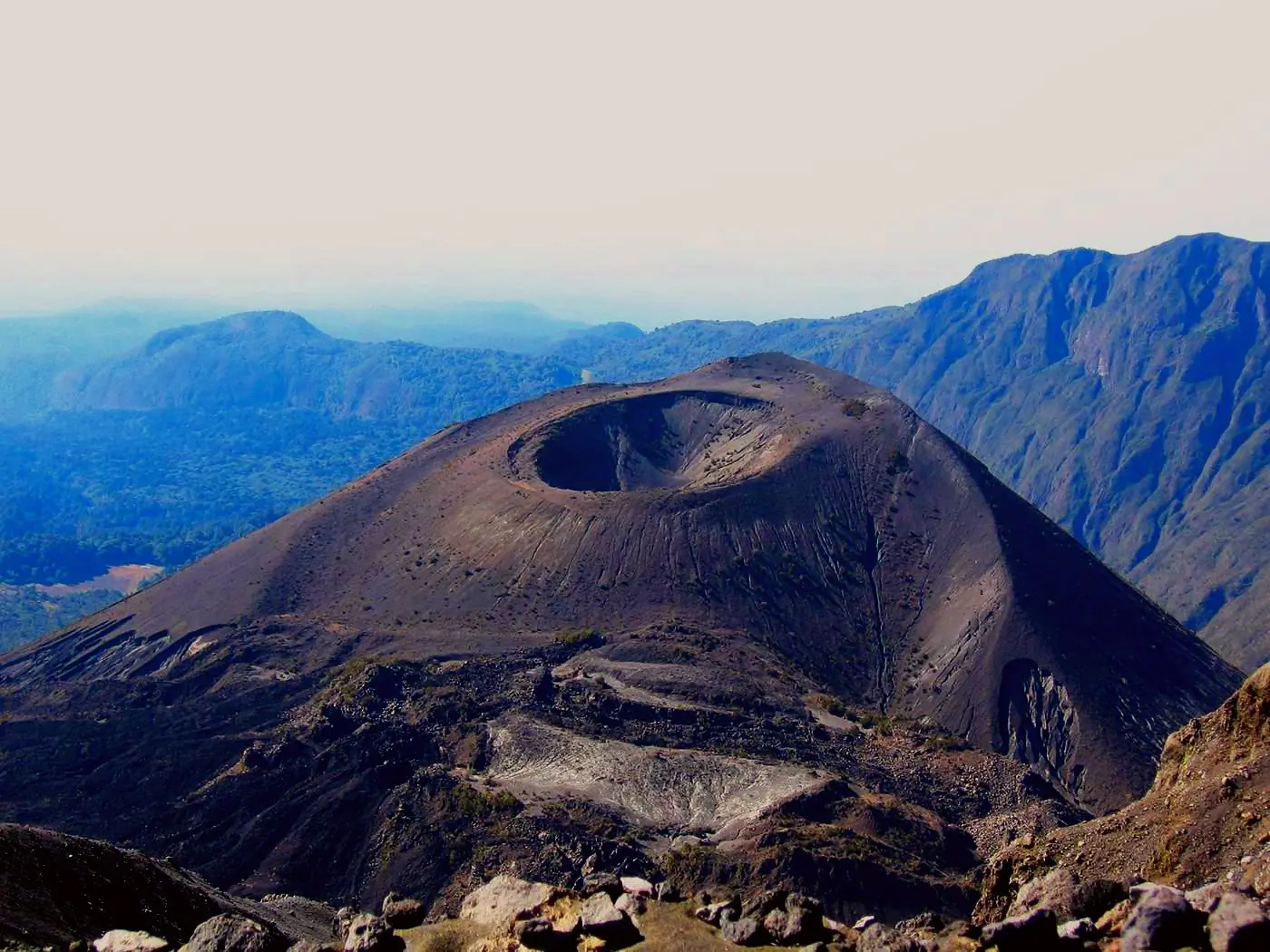
- Kibo – 5,895m. The highest and youngest. Contains Uhuru Peak. Still dormant — fumaroles and gases remain in the crater.
- Mawenzi – 5,149m. The second highest, with jagged rocky peaks. Not accessible to regular trekkers.
- Shira – 3,962m. The oldest and largest, now collapsed to form the Shira Plateau.
Five Ecological Zones
Climbers pass through five distinct zones on the way to the summit:
- Cultivation Zone (800–1,800m) – Coffee farms, banana plantations, villages
- Rainforest Zone (1,800–2,800m) – Montane forest, colobus monkeys, giant ferns
- Heather and Moorland (2,800–4,000m) – Open moorland, giant groundsels
- Alpine Desert (4,000–5,000m) – Barren and rocky, extreme temperature swings
- Arctic Zone (5,000–5,895m) – Glaciers, ice fields, permanent snow year-round
Kilimanjaro Glaciers Are Disappearing
Over 85% of the ice fields have disappeared since 1912. Scientists predict the remaining glaciers could vanish by the 2040s — making now a genuinely time-sensitive opportunity to see them.
Quick Facts at a Glance
- Summit: Uhuru Peak, 5,895m / 19,341ft
- Country: Tanzania
- Type: Stratovolcano (dormant)
- First summit: Hans Meyer and Ludwig Purtscheller, 1889
- Fastest ascent record: Karl Egloff — 4h 56min (2014)
- Nearest airport: Kilimanjaro International Airport (JRO)
- Best months to climb: January–March and June–October
- Annual climbers: Approximately 35,000–50,000 per year
Ready to Climb the Roof of Africa?
Serengeti Nexus offers all-inclusive Kilimanjaro climbs led by KINAPA-certified local guides. Whether you choose the scenic Lemosho Route or the classic Machame, we handle everything so you can focus on reaching Uhuru Peak.